
Drowning in possibilities
How experimenting derailed my comic book process

“I tried so hard and got so far.
But in the end, it doesn't even matter.”— “In the End,” Linkin Park

I shit the bed. I fucked it.
I’ve been experimenting so much with my art lately that I completely derailed my process. I knew conceptually that it was possible to stray too far into the wilderness of technique, but I never really imagined I’d be here. This realization has been something of a shock. I am mired, bogged down, thinking about every tiny little mark.
For a lot of traditional visual arts — painting, sculpture and the like — the working method often allows for considerable leeway. A piece can sit, work can progress on multiple projects simultaneously and generally, there’s room to breathe. Experimentation is vital; this is how to discover new ground, innovate and evolve a uniquely personal practice. But painting tolerates wandering; comics do not.
“Kid, you’re one of the best. But put your work in galleries. Don’t do comics. Comics will break your heart.”
— Jack Kirby (allegedly)
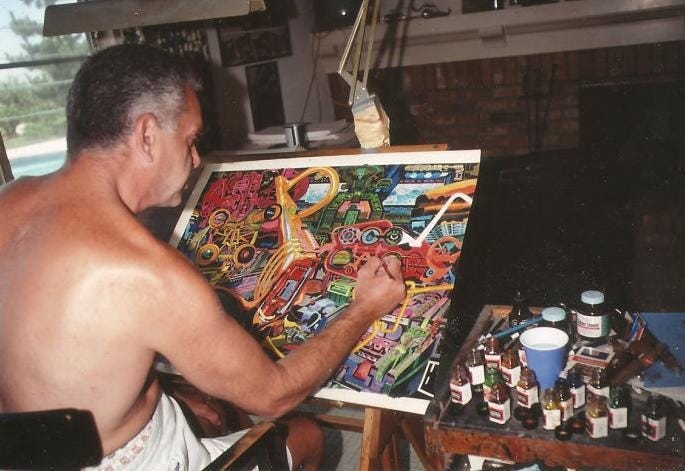
While sequential art is a critical and important art form, what fundamentally drives the industry is creators who consistently churn out content under deadline. Time is a resource as vital as ink and paper.
Over the past few months, I’ve felt this intense drive to push boundaries. I’ve been messing with homemade screen tones, exploring new digital techniques and generally trying to turn every piece into a testing ground. And that’s when I started to shit in my sketchbook.
The problem wasn’t the desire to experiment; it was the lack of realization that I can’t treat every single page as a new frontier while also needing to fulfill promises and meet deadlines. The time, energy and resources required to constantly experiment simply ground my production to a trickle.
I found myself moving away from a traditional, comfortable process that works: pencil, ink and a simple gray ink wash — my creative safe lanes. By diving deep into new techniques, I began to analyze everything then analyze my analysis.
This intense focus on the how — “Should I use this fine hatching technique?” “What about scanning the page and printing it off to apply ink wash?” — led to a crippling degree of analysis paralysis. Too many possibilities, too many decisions and the noise of all these techniques completely derailed my speed and rhythm.
Experimentation is important, but a reliable, quick process in sequential art is non-negotiable. I’d foregone the fundamentals needed to build a system that reliably churns out good art more quickly. I reached for the sun. I singed my wings. O, woe! O, woe!
The realization has been a cold splash of water: I must return to the fundamentals. I’m pulling pages for my current project, reloading the ink-wash watercolor brush pen and settling back into the groove. It’s time to stop thinking so hard about the process and just do it. Art needs made and a solid, established work practice is what makes that happen.
Sometimes, the most revolutionary thing you can do is what you know best.
D.R. AND QUINCH DOODLE
How do you pronounce that? “Kwinch”? “Kinch”? Was Alan Moore aware that the British and American differ vastly on the pronunciation of their “U.” (“Dyune” versus “Doon” and “Pooma” versus “Pee-you-ma,” for instance.) Anyhow, I normally have various bits of random paper laying around on my desk. I drew this on one of them.
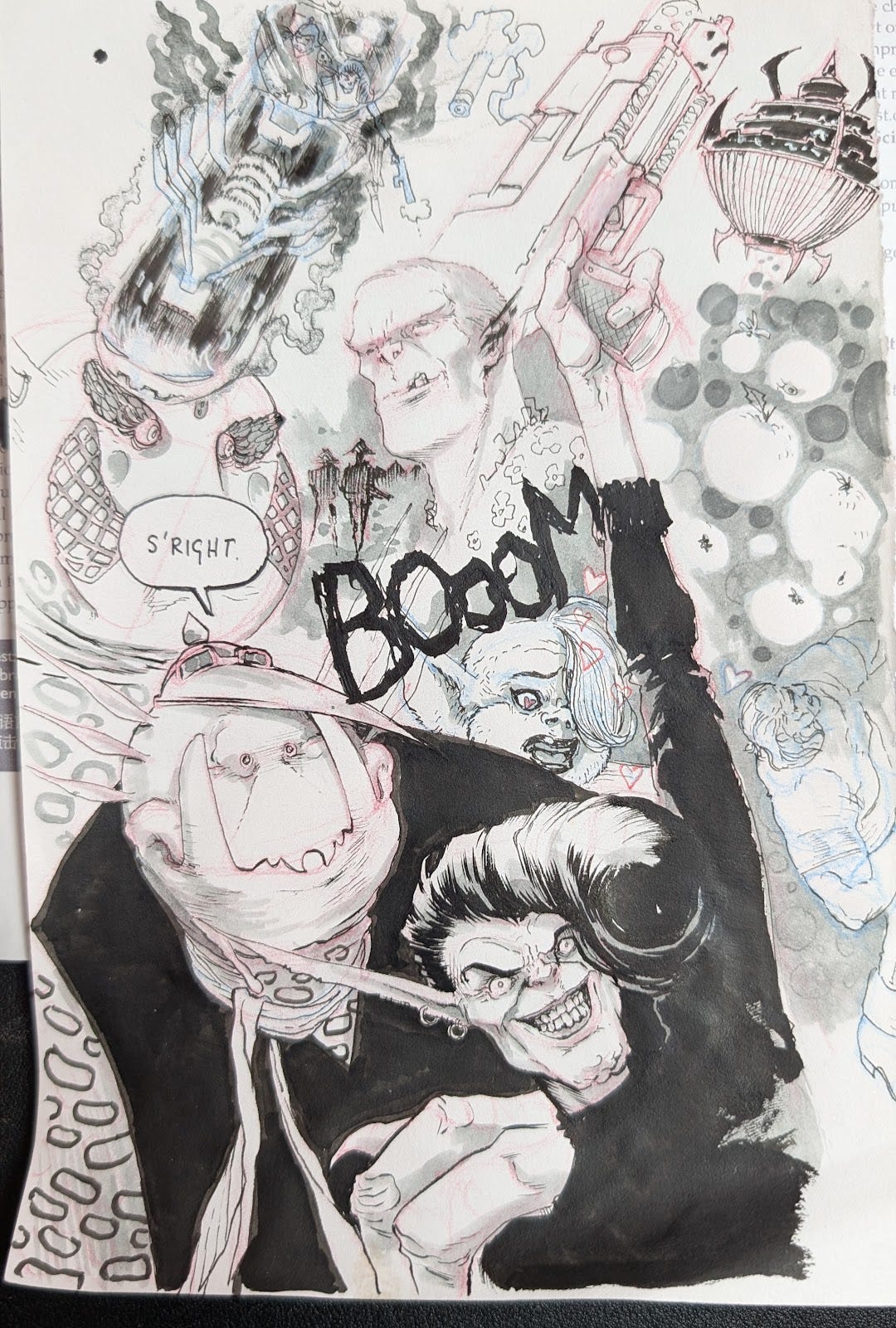
This iconic couple are two of my most favorite creations. Their genesis is with Alan Moore and Alan Davis, so of course they are. Note the simple wash. No tones; no experimenting. Pencil, ink, paper and wash. And what better analogy for being overwhelmed than a famous actor’s death under a pile of citrus fruit?
Until next time, mind the oranges, Marlon. 🍊
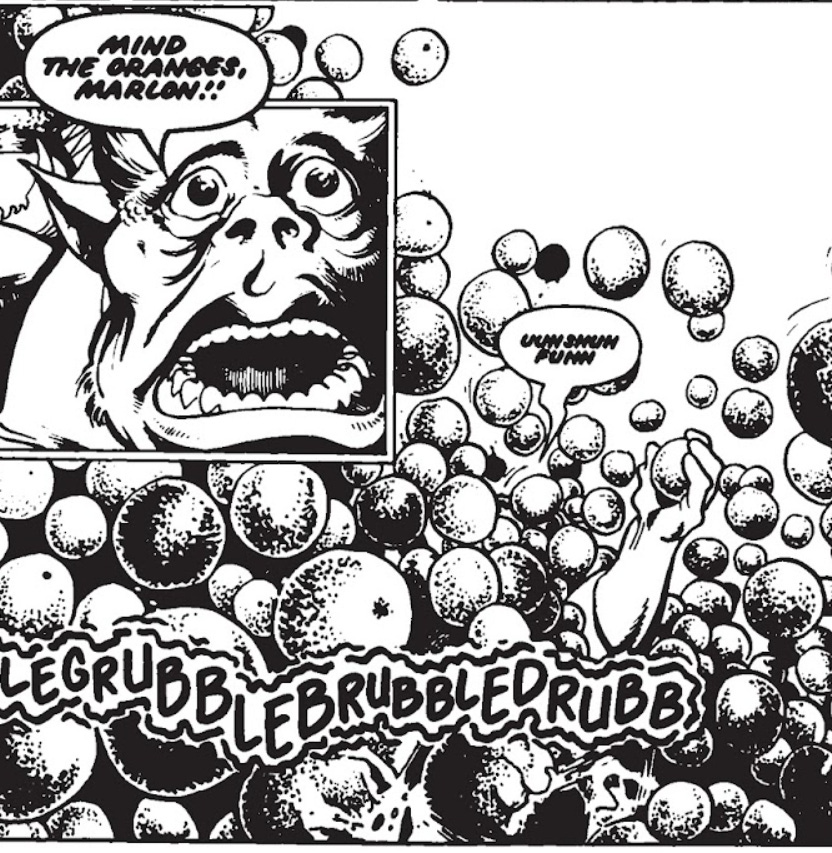

I totally relate to this...
Loved this honesty and feedback about the creative process. I went through something similar recently. It’s all very Aquarius eclipsey